Whole-Home Air Purifier Installation Gallery
These installation photographs show different mounting positions and duct routes. Use them to discuss the finish you want; the layout, access and required permissions at your property still need assessment.
Outdoor mounting
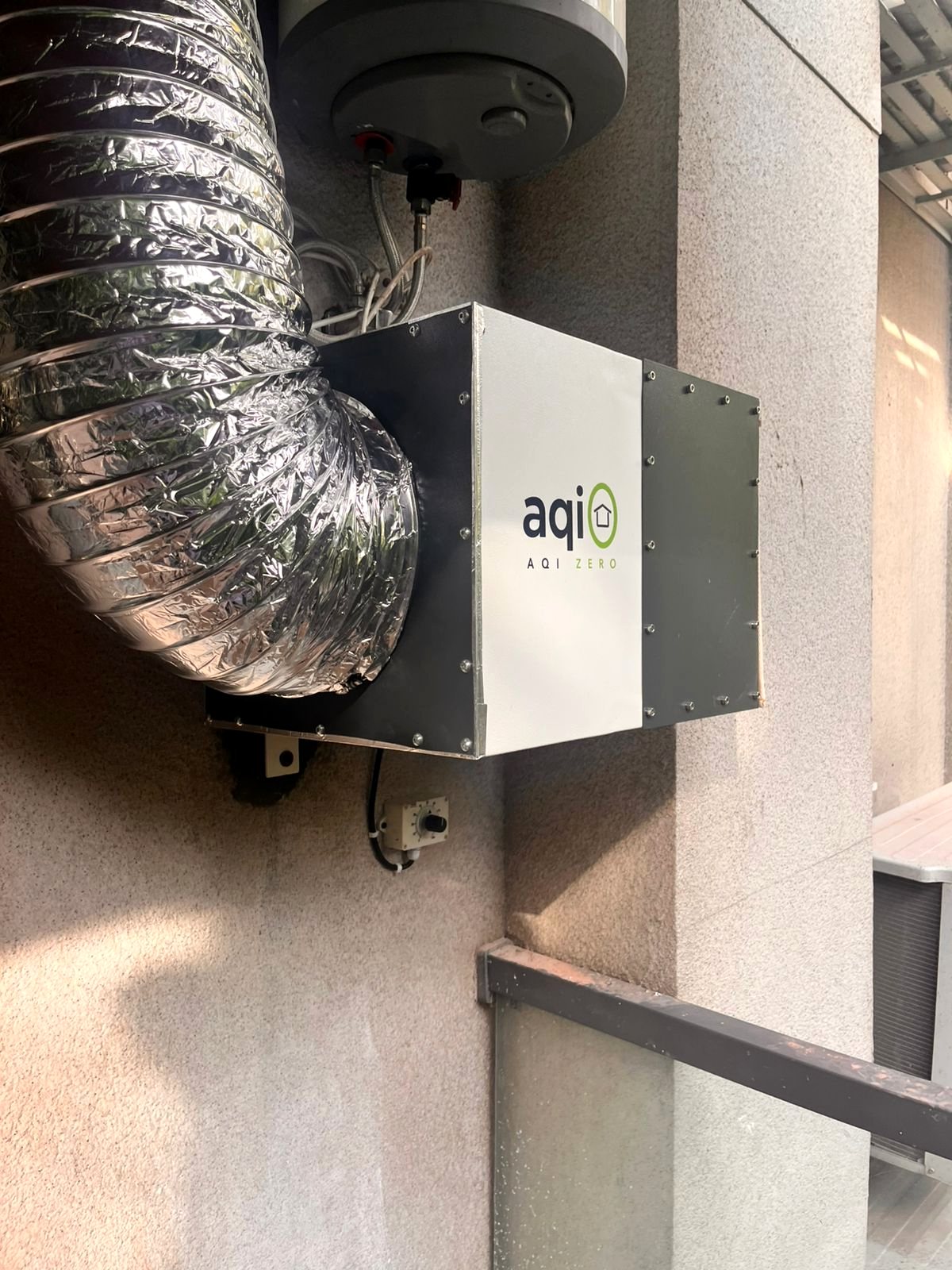
The outdoor unit needs a suitable mounting surface and accessible filter housing. Intake placement is assessed away from kitchen, bathroom, parking and generator exhausts. An exposed location may need a cover, as set out in the technical note.
Balcony and window route
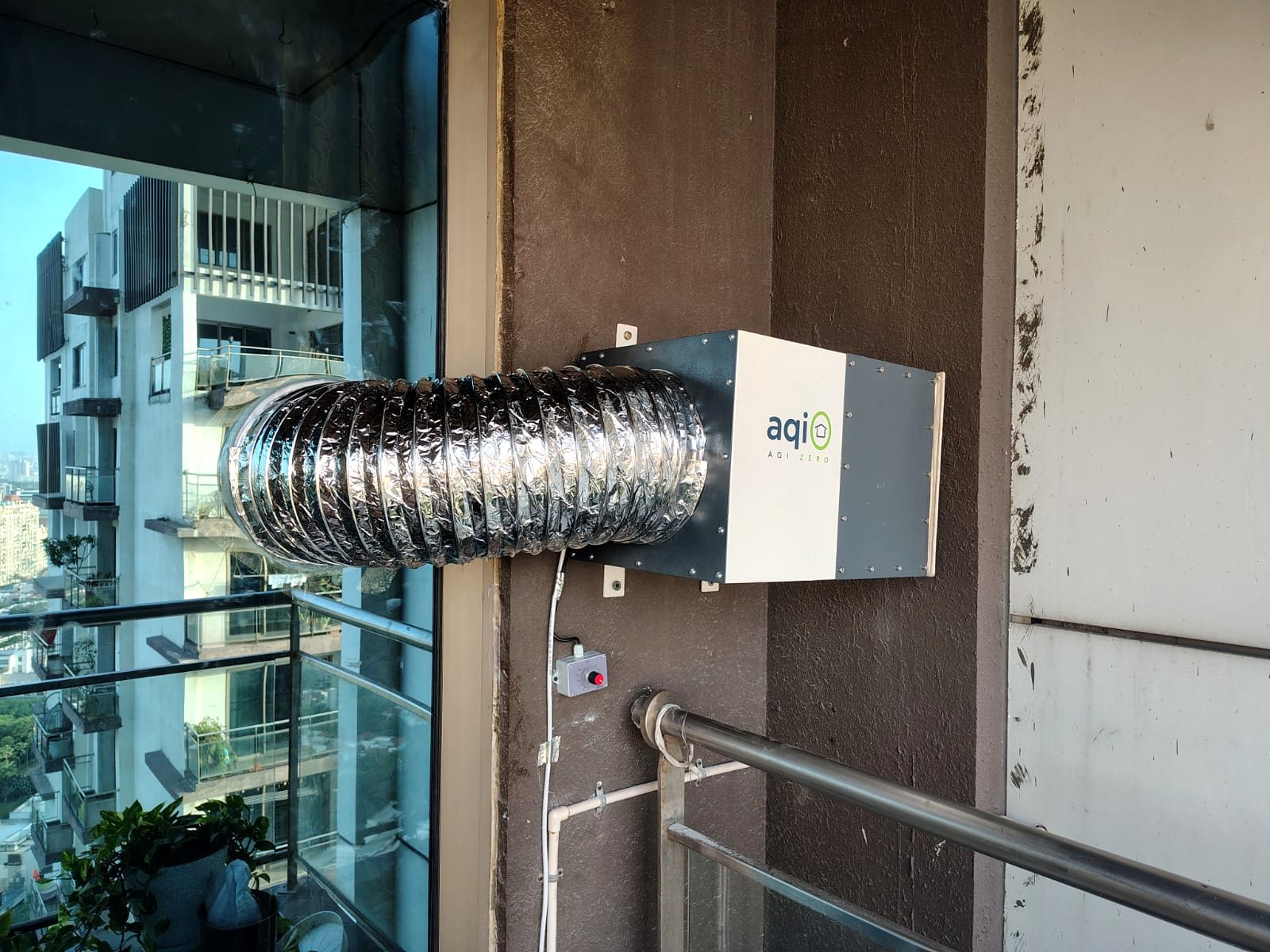
Balcony installations need room for the unit and for safe service access. A higher floor does not itself establish cleaner intake air. Check nearby outlets and building requirements before choosing the position.
Clearance and access
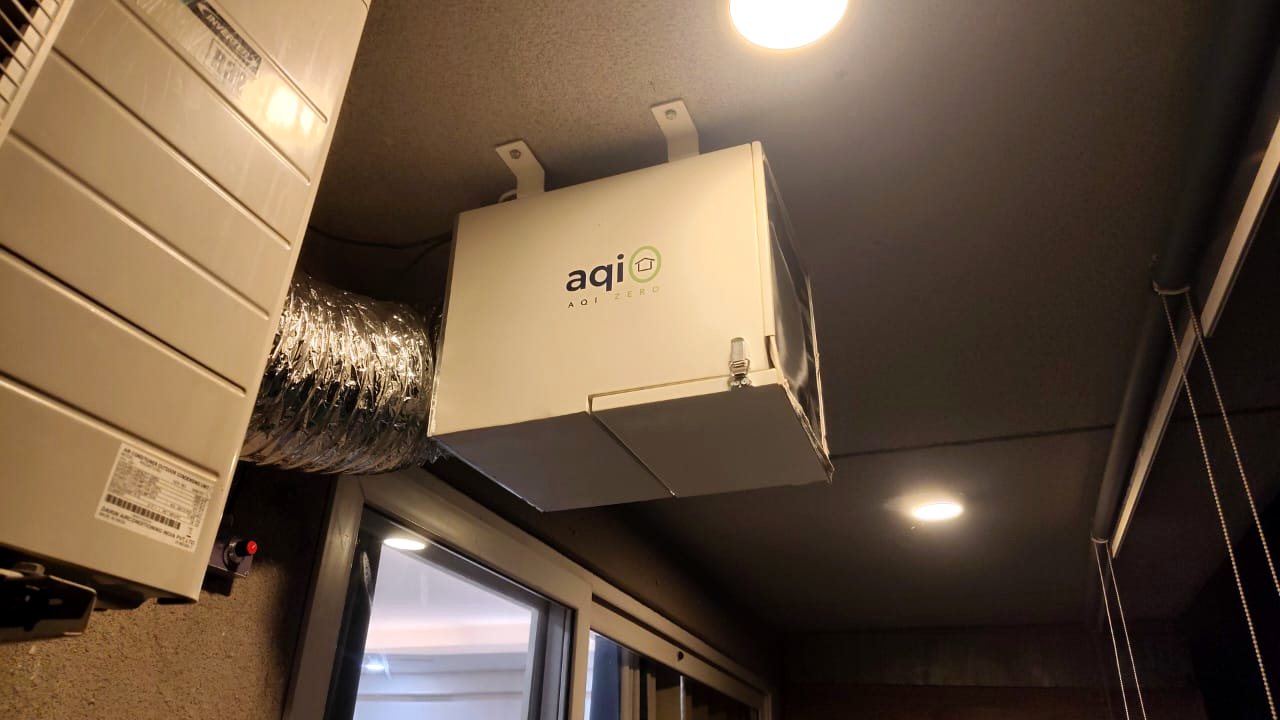
We confirm mounting, access and the supply path into occupied rooms with you. Existing cooling equipment remains separate from aqi0’s standalone installation. An overhead placement needs a practical maintenance plan.
Routing around existing features
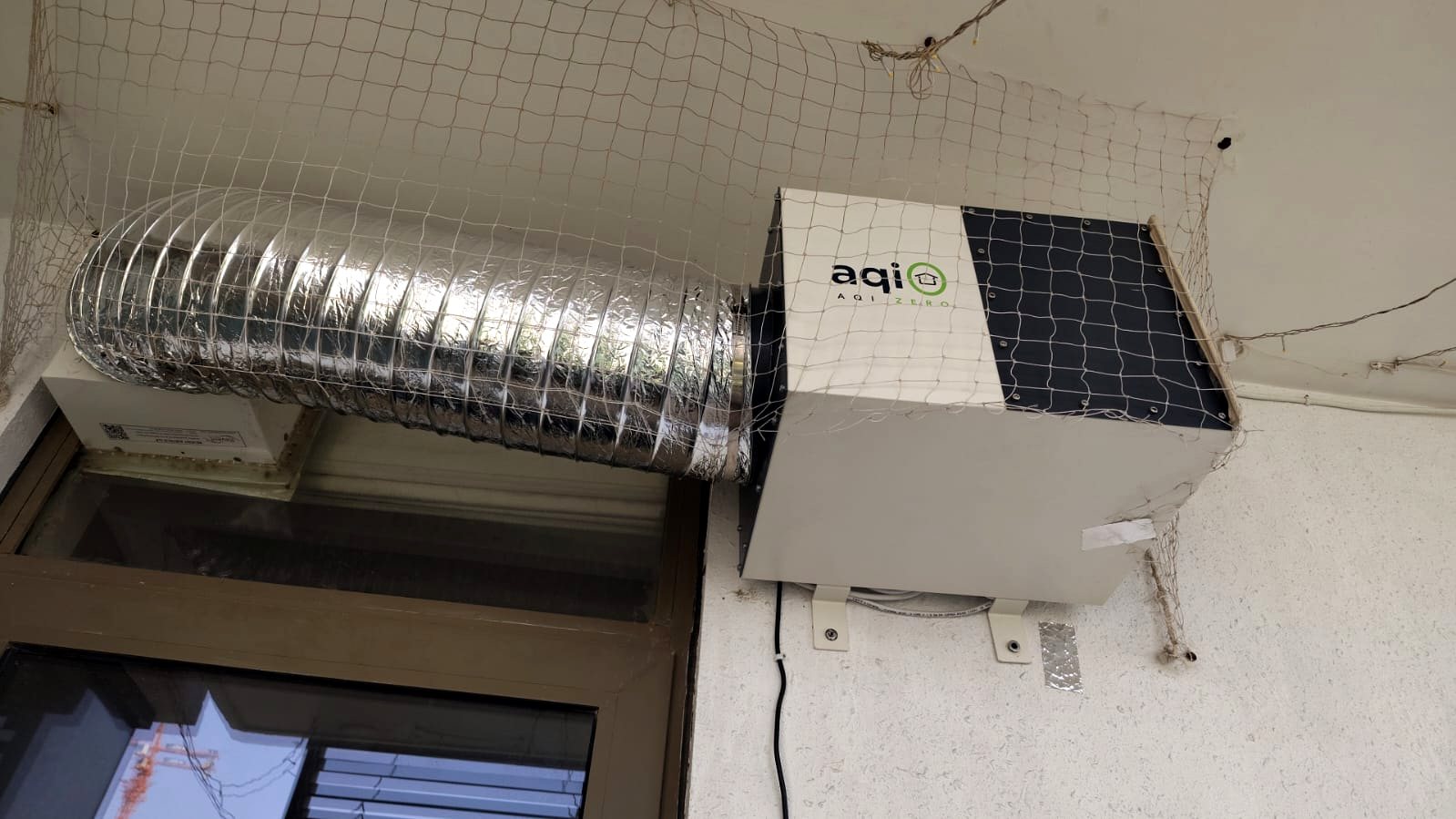
Show the team balcony netting, glazing and other features that affect access. The proposed work should state the opening and duct route before installation. Toughened glass cannot be cut after tempering: a specialist replacement pane may be needed.
Terrace placement
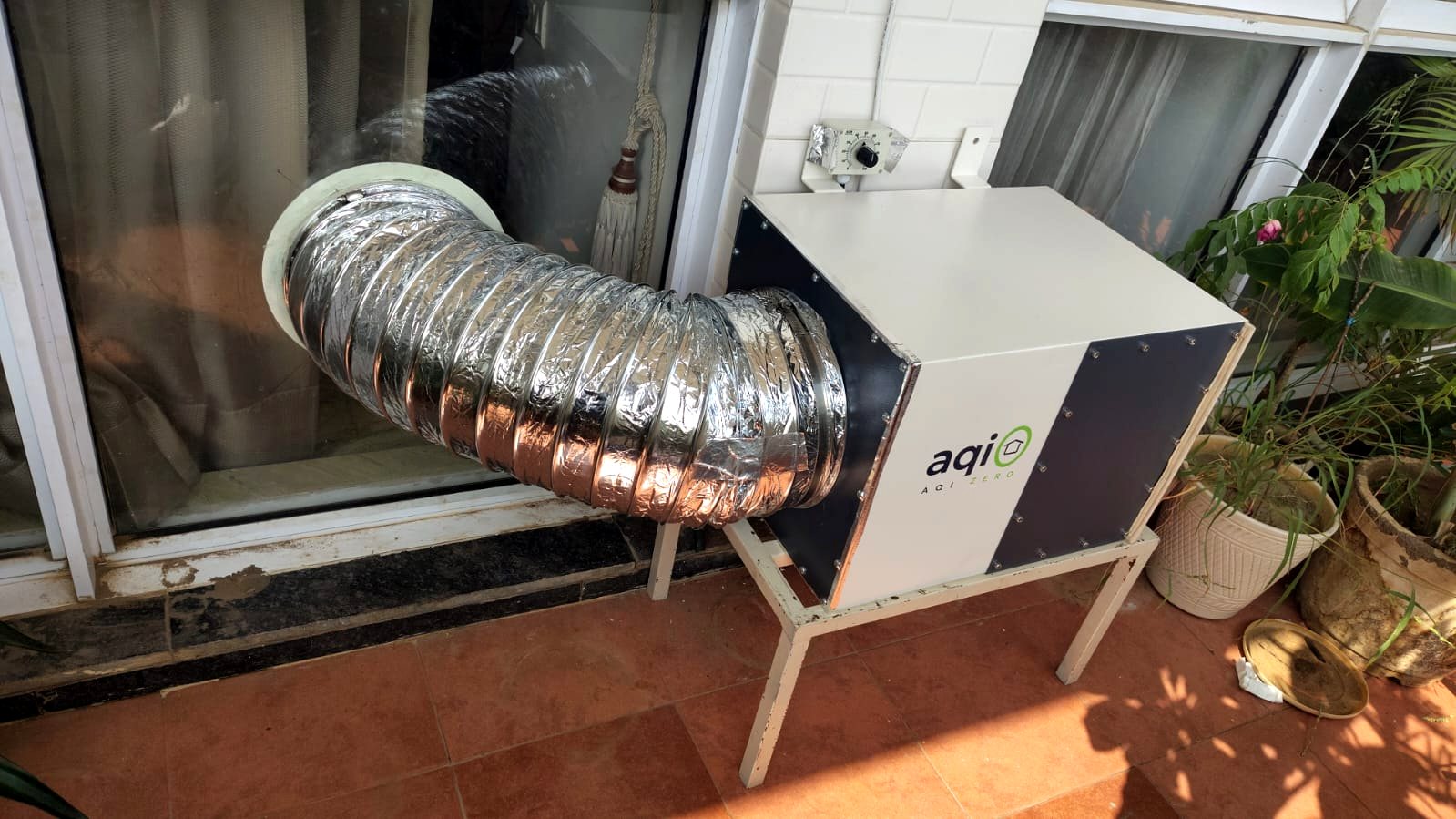
A photograph records one configuration, not a recommended layout for every home. Supports, weather exposure, sealing, access and the air path must be checked for the proposed installation.
What you see indoors
The outdoor unit supplies air through a duct terminating at an indoor diffuser. The exact visible route and finish depend on the property. Ask the team to show where the diffuser will sit and how air will reach closed bedrooms before agreeing the work.
Plan for maintenance
Allow access to clean the pre-filter and replace the H13 panels. The care plan replaces one panel on rotation approximately every 45 days through the October–February peak, with longer intervals based on pollution load during the rest of the year. See the filter-care guide.
Share your proposed installation area
A floor plan, carpet area and photos of the external wall or balcony help us prepare. Include the nearest power point and any landlord or society requirements. We confirm suitability and scope with you.
Explore installed pricing and the technical note for inclusions, exclusions and the performance commitment.