VOCs in Indian homes — from furniture, paint, sprays, candles and more

VOCs in Indian Homes: A Plain-English Guide to the 1,200-Compound Problem

VOCs — volatile organic compounds — are carbon-based chemicals that evaporate at room temperature and end up in the air you breathe. A modern Indian home emits over a thousand different VOCs from furniture, paint, carpets, cleaning products, deodorant sprays, room fresheners, mosquito repellents, scented candles, and cooking. Some are mostly harmless. Several — formaldehyde, benzene, toluene, xylene — are classified by IARC and other regulators as known or suspected human carcinogens. Indoor VOC concentrations in modern homes typically run 2–5 times higher than outdoor levels, and during specific activities like painting, applying nail polish or spraying air freshener, can spike 100 times higher. This is the pillar guide.

Key numbers

What a VOC actually is

VOCs are carbon-based molecules small and light enough to evaporate from solids and liquids at room temperature. Three groupings cover most of what you encounter:

The total VOC (TVOC) measurement you see on consumer monitors is a sum across hundreds of compounds — useful as a relative indicator but not a specific health signal.

Where VOCs come from in a typical Indian home

A systematic walk through a 2BHK NCR apartment:

Walls and ceilings — emit VOCs from paint for weeks to months after application. Conventional emulsion paints contain 50–150 g/L of VOCs; “low-VOC” paints sit at 5–50 g/L; “zero-VOC” at <5 g/L. Major Indian brands (Asian Paints Nilaya/Royale Health Shield, Berger Silk Breathe Easy at 8.4 g/L, Dulux Better Living Air Clean, Nerolac Eco Clean) now offer low-VOC ranges.

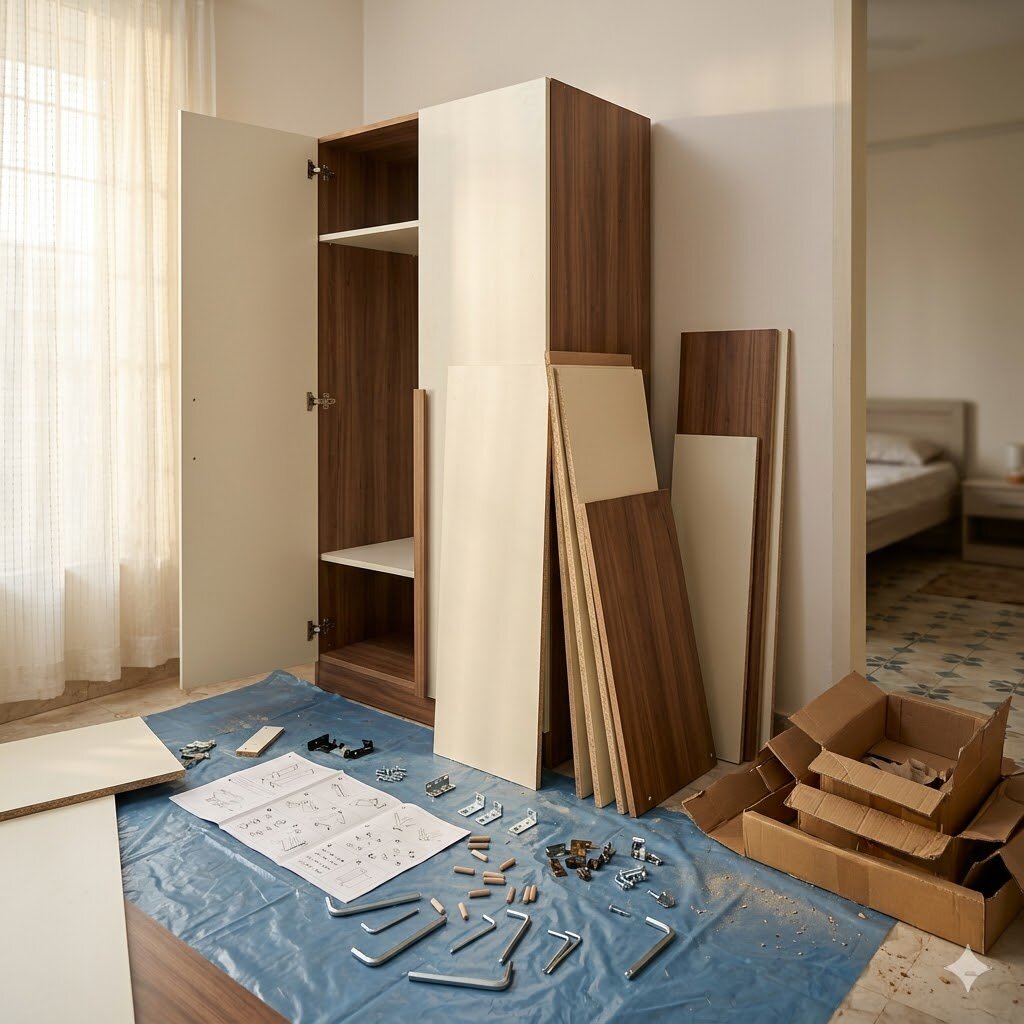
Furniture — MDF, plywood, particleboard furniture off-gases formaldehyde for years. The urea-formaldehyde adhesive used as a binder slowly releases free formaldehyde into the air. Indian standards IS 3087 (particleboard) and IS 12406 (MDF) reference emission tests but enforcement is weak; cheap furniture frequently exceeds international E1 limits.

Mattresses and upholstery — new mattresses (memory foam, latex, polyfoam) off-gas for 4–12 weeks after delivery. Indian brands like Wakefit, Sleepwell and Sleepyhead vary in disclosure; international CertiPUR-US certification is the best available signal.

Carpets and rugs — new carpet off-gases 4VPC (4-phenylcyclohexene, the “new carpet smell”), styrene, and formaldehyde from adhesives.

Cleaning products — phenolic disinfectants (Dettol, Lizol), bleaches, glass cleaners, and floor cleaners contribute VOCs during and after use. Ammonia-based glass cleaners are particularly potent.

Deodorant and body sprays — aerosol products emit VOCs at very high local concentrations. Independent testing has found benzene contamination up to 17.7 ppm in some body sprays (Valisure 2021). Propellant butane is the typical source.

Room fresheners — plug-ins, sprays and reed diffusers. A 2008 NRDC study found phthalates in 86% of US air-freshener products; a 2010 review found 1–8 hazardous chemicals per product, with 44% containing at least one of 24 carcinogenic HAPs. India does not require disclosure.

Mosquito coils, liquid vaporisers and mats — release pyrethroids plus combustion VOCs and PM2.5. A burning mosquito coil emits PM2.5 equivalent to 75–135 cigarettes (Discover Applied Sciences, 2019); formaldehyde emission can equal 51 cigarettes per coil.

Cooking — heated oils release acrolein and formaldehyde; gas combustion adds NO₂ and CO; tadka and frying are particularly VOC-intensive.

Candles and incense — paraffin candles emit benzene and toluene; agarbatti/dhoop produces high PM2.5 plus aromatic VOCs.

Recently dry-cleaned clothes — perchloroethylene (perc), a chlorinated solvent and probable human carcinogen, off-gases from dry-cleaned fabric for days.

Garage and storage — paint cans, petrol, solvents, varnishes. Even sealed containers leak slowly.

New electronics — fresh-out-of-box laptops, TVs, printers off-gas VOCs from plastic casings and circuit board flame retardants.

The compound list that matters for health

Five VOCs that warrant specific attention:

1. Formaldehyde (HCHO) IARC Group 1 carcinogen. Linked to nasopharyngeal cancer and myeloid leukaemia. WHO indoor guideline: 100 µg/m³ (30-min average). Sources: MDF furniture, mattresses, carpets, paint, mosquito coils, candles.

2. Benzene (C₆H₆) IARC Group 1 carcinogen. Linked to leukaemia. No safe threshold. Sources: tobacco smoke, vehicle exhaust infiltration, aerosol propellants, paint thinners, mothballs.

3. Toluene Reproductive toxicant; central nervous system effects at chronic exposure. Sources: paint, adhesives, nail polish remover, petroleum products.

4. Xylenes Respiratory and neurological irritant. Sources: paint, varnishes, solvents.

5. Phthalates (technically semi-volatile, often grouped) Endocrine disruptors. Linked to reproductive harm, asthma in children. Sources: air fresheners, vinyl flooring, plastic toys, fragranced personal care products.

Why “natural” fragrance products aren’t safer

A widespread misconception: that essential-oil-based or “natural” room sprays are safer than synthetic ones. Reality:

Less fragrance is the rule. The cleanest indoor air is air without fragrance products.

Measurement realities

Consumer “TVOC” sensors (in IQAir, Awair, Atmotube, Aranet5 monitors) read total VOC roughly but cannot identify specific compounds. They are useful for spotting activity-related spikes — when you spray something, paint something, or burn something — and tracking baseline trends. They are not useful for diagnosing specific cancer risk.

For specific compound testing, a passive sampler badge sent to a lab gives quantitative results for formaldehyde, benzene and others. Cost: ₹3,000–8,000 per test in India.

What actually reduces indoor VOC exposure

Five interventions, ranked by effect:

1. Source elimination. Don’t bring it home. Switch to low-VOC paint at the next paint job. Skip air fresheners entirely. Replace MDF furniture gradually with solid wood when possible. Use an alum stone instead of aerosol deodorant. Avoid scented candles.

2. Ventilation. Fresh air dilutes everything. A positive-pressure fresh-air system continuously dilutes VOCs by 70–90% from a sealed-home baseline. Open windows when AQI allows.

3. Activated carbon filtration. Quality activated carbon adsorbs many VOCs. Most consumer air purifiers have a thin carbon “pre-filter” that loads up within weeks. Effective VOC adsorption requires kilograms of carbon, not grams.

4. Time-of-use. Spray products outdoors or in a well-ventilated bathroom with exhaust on. Use cleaning products with windows open.

5. Off-gas before installation. New furniture, mattresses, paint can off-gas in a balcony, garage, or unoccupied room for 1–4 weeks before being moved into bedrooms.

What aqi0’s fresh-air system actually does for VOCs

A positive-pressure fresh-air system continuously delivers ~500 m³/h of filtered outdoor air into the home. For VOCs specifically:

For specific high-source cases (newly painted home, fresh furniture install, smoking household), a supplementary activated carbon stage is available as an add-on.

FAQ

Are VOCs more dangerous than PM2.5? Different. PM2.5 is a cumulative particulate exposure with clear cardiovascular and respiratory effects. VOCs include specific carcinogens and irritants that cause distinct harms. Both matter; they are not interchangeable.

Does smell equal VOC exposure? Roughly. Most VOCs you encounter at home are detectable by smell. But some — including formaldehyde and benzene at moderate concentrations — are present without strong odour. “Doesn’t smell like anything” is not “no VOCs.”

Do candles really emit benzene? Paraffin candles can emit small amounts of benzene and toluene. Beeswax and soy candles are cleaner but still produce combustion VOCs. Burning anything in a sealed room is suboptimal for indoor air.

Is incense (agarbatti) worse than candles? Yes, generally. Incense burning produces high PM2.5 (often 500+ µg/m³ in the room) along with aromatic VOCs. Religious use is widespread in India; ventilation during and after burning matters.

Are essential oils a safer alternative to air fresheners? Marginally. Essential oils still add VOCs (terpenes) that react with ozone to form secondary pollutants. Less use is the rule.