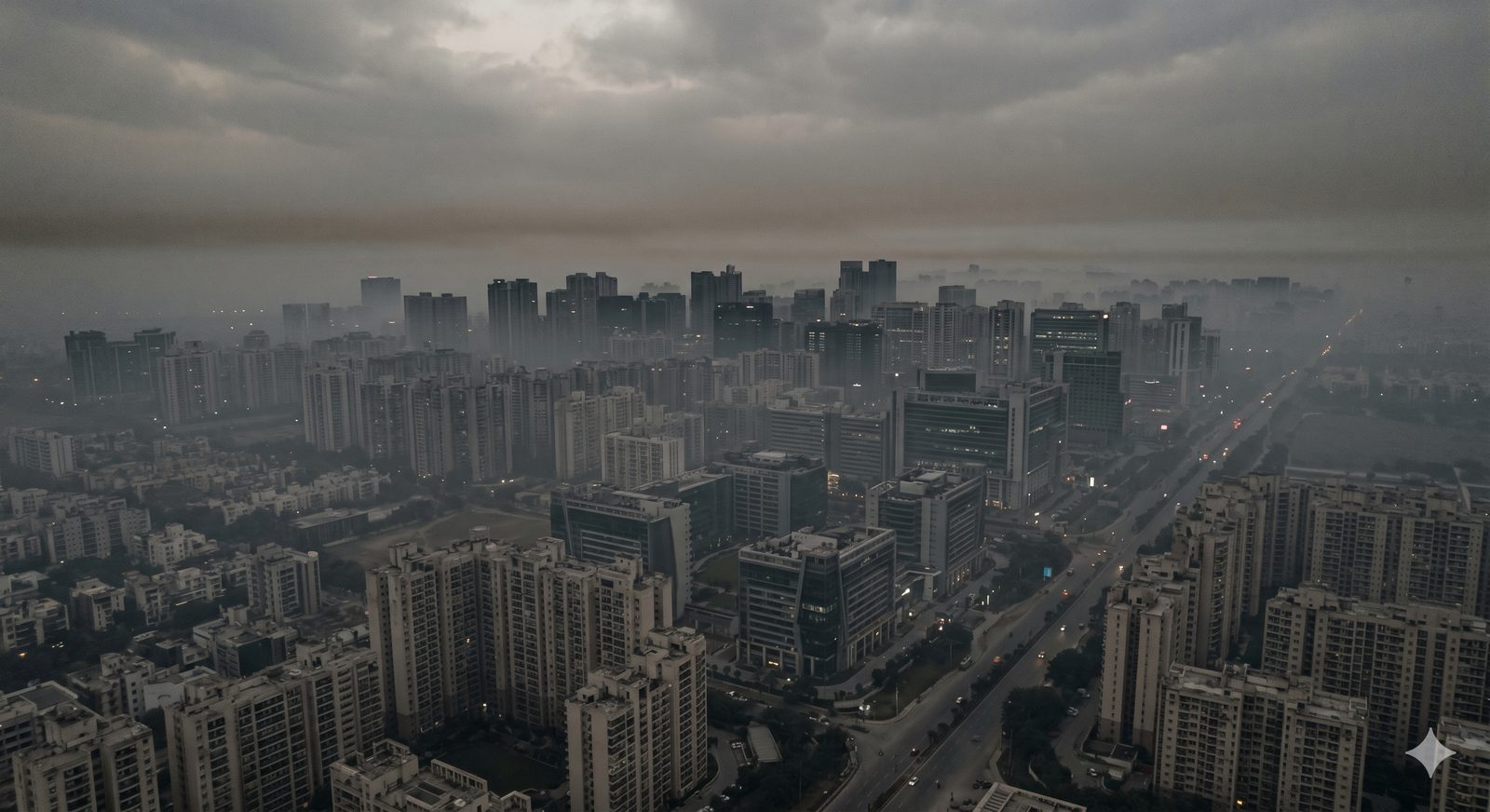
Delhi Air Pollution at Home: A Practical Action Plan
A practical response to Delhi pollution starts with what is happening inside your own home. Outdoor pollution, cooking, ventilation and the way equipment is used can all change the result. There is no single outdoor AQI number at which every room purifier suddenly stops working.
Start with changes you can make today
Reduce indoor smoke sources and use a working kitchen exhaust that discharges outdoors. Keep its filters and duct route maintained. Manage dust with cleaning methods that avoid unnecessarily stirring it into the air.
These are sensible first steps before a large purchase. Their effect depends on the sources in your home; a cooking-related improvement cannot be assigned the same percentage in every apartment. EPA’s indoor-air guidance describes source control, ventilation and air cleaning as complementary approaches.
Establish a baseline in occupied rooms
Measure PM2.5 in the bedroom and living area, noting the outdoor reading, cooking times, open windows and purifier settings. Compare concentrations in µg/m³ with the same averaging period; do not compare an annual city average directly with a 24-hour guideline.
For occupied-room ventilation, use a suitable CO₂ instrument separately. An AQI display is not necessarily a CO₂ measurement. Our PM2.5 guide and bedroom CO₂ guide explain the distinction.
Choose equipment around the problem
One room or a rental: a correctly sized room purifier can be a useful particle-control option. Check CADR, the speed you will use, filter availability and the room’s actual readings. It does not provide outdoor air simply by recirculating room air.
Several occupied rooms with ventilation needs: consider a planned filtered outdoor-air supply. Check room connections, external intake placement, maintenance access and thermal load. Existing kitchen exhaust still matters.
Cooking peaks despite filtration: inspect capture at the source before adding more general room equipment. A chimney’s headline airflow alone does not establish capture performance.
See fresh air versus room purification for the differences.
Where aqi0 fits
aqi0 installs a standalone whole-home air purifier with a washable pre-filter and H13 HEPA. One unit is specified for up to 2,000 sq ft carpet area; larger homes or multiple floors require assessment for two units. The standard price is ₹82,600, fully installed, with an optional ₹14,750 annual care plan.
The technical note sets out the performance commitment, operating conditions and remedy. We assess the site before installation and check indoor PM2.5 at commissioning. Timing and any special civil work are confirmed for the property.
How to know the changes helped
Repeat measurements in the same rooms with comparable occupancy, settings and outdoor conditions. Look at occupied periods and cooking recovery, not only the best reading immediately after installation. If a distant bedroom performs differently, investigate its air path rather than averaging the issue away.
For Gurugram or South Delhi, chat with us. For other NCR locations, confirm service availability before planning installation.
Frequently asked
Will a fresh air system work during Delhi’s worst AQI 500+ days?
Yes. Real measurements: when outdoor AQI hit 500+ during Diwali 2024 in Gurugram, indoor PM2.5 in homes with aqi0 systems stayed at 30-45 µg/m³ — about 1/10th of outdoor. Indoor AQI was around 90-110 (“Moderate”) while outdoor was “Severe-plus”.
Does it work in summer?
Yes, all year. Summer baseline AQI in NCR is 100-200 (PM2.5 of 50-90 µg/m³). The system reduces this to under 15 µg/m³ indoors. Bonus: continuous fresh air keeps CO₂ in check during summer when ACs are on and homes are sealed.
What about winter heat loss?
Incoming filtered air comes in at outdoor temperature. In Delhi winter (10-25°C lows), this is mildly cold for 4-6 weeks. Most homes’ room heaters or AC heat-mode handle this without noticeable bill increase. A winter heater add-on is in development for late 2026 to pre-warm incoming air.
How long does this take to install?
A single day. 4-6 hours typical. We confirm layout and sizing with you first. Install within 5-7 days of confirmed order. Full team handles everything except toughened-glass cutting (handled by your glass vendor).
What’s the long-term Delhi outlook?
Delhi’s PM2.5 has stayed stubbornly elevated since 2014 measurements began. Sources are diverse and remediation is slow. Reasonable to assume residential indoor air will remain a do-it-yourself problem for the next decade. The fresh air system is a 10-year asset.