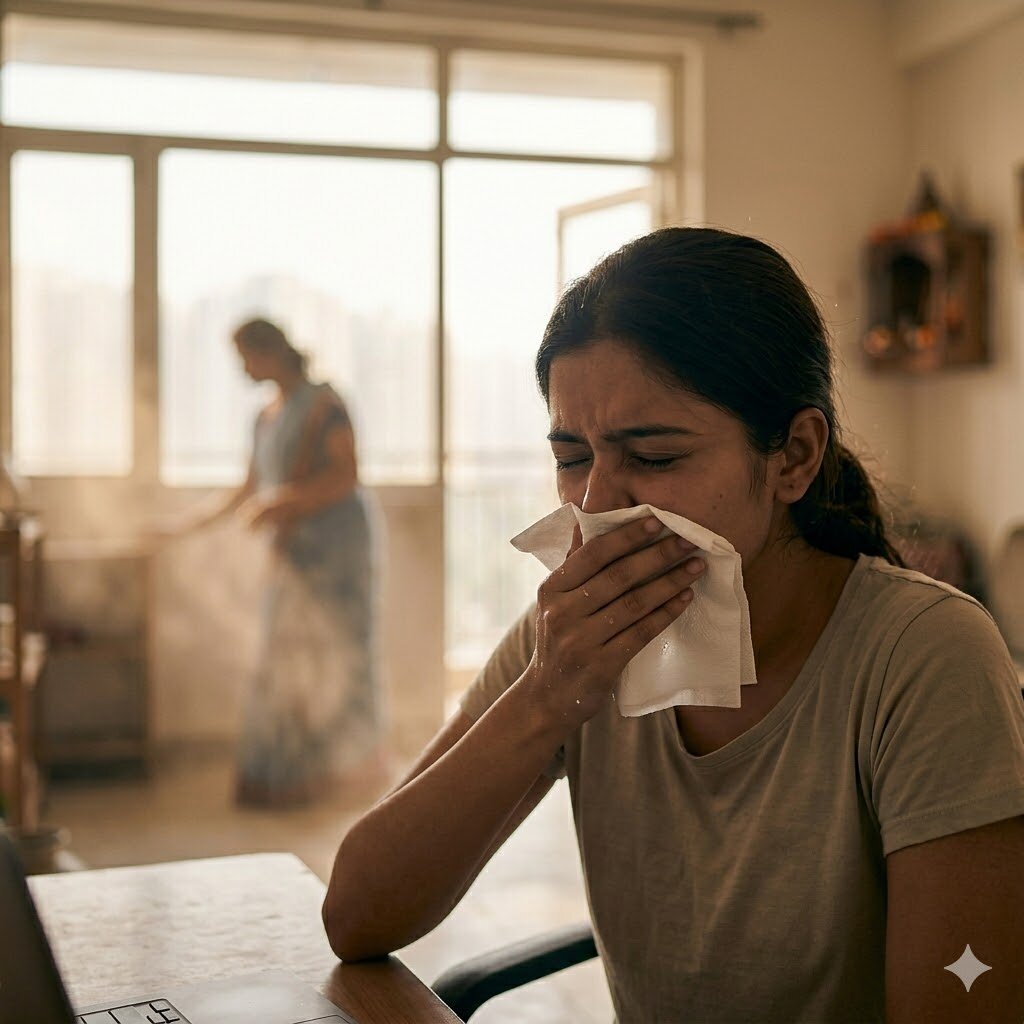
Long-Term Air Pollution Exposure: What the Numbers Can Tell You
Air pollution is an established public-health concern. WHO links fine-particle exposure with cardiovascular and respiratory disease and cancers. Its ambient air-pollution fact sheet also explains why reducing outdoor sources requires action beyond individual households.
A city’s pollution history does not tell you the mass of particles permanently retained in one person’s lungs or the number of years that person will lose. Those claims require much more than an annual city average and an assumed breathing rate.
Exposure, inhaled amount and retained amount differ
An outdoor concentration is a measurement of the surrounding air. Personal exposure varies with locations, time spent there, indoor conditions and activity. An estimate of inhaled amount then needs additional assumptions; retained amount also depends on deposition and clearance.
Do not turn a simplified calculation into a claim that half of everything inhaled remains permanently in the lungs. Nor should a population estimate of life expectancy be read as an individual diagnosis.
Compare changes you can actually measure
Indoor PM2.5 swings with cooking, an open door and the weather, so a single reading tells you little on its own. We’ll confirm layout and sizing with you — placement, duct route, power point — rather than measuring air you already know tracks the air outside.
Keep concentration and AQI separate. State whether a number is an instantaneous reading or an average, and compare it with a guideline using the same averaging period. See PM2.5 levels and measurement.
Lower exposure is not a promise to reverse disease
An improvement in room air does not establish that existing disease has reversed, how quickly inflammation will change, or how many future illnesses a particular household has prevented. Avoid translating a percentage change in PM2.5 directly into the same percentage change in medical risk.
For symptoms or questions about past exposure, discuss personal history with a clinician. A city of residence alone is not a reason for this website to recommend a CT scan or a screening schedule.
Plan an improvement you can maintain
Identify the rooms you use, the purpose of any air-treatment equipment and the service it needs. Keep the operating instructions and a record of filter changes. If readings drift, investigate room conditions and maintenance before drawing a medical conclusion.
aqi0’s whole-home air purifier supplies filtered outdoor air through a standalone system. Its technical note sets out the performance commitment and operating conditions; the filter-care guide explains upkeep. Neither is a guarantee of a particular health outcome.
FAQ
I’ve smoked for 30 years. Does fixing my air quality help?
Yes. Smoking and PM2.5 contribute additively to lung damage. Reducing PM2.5 exposure helps independently of smoking status. Quitting smoking is the larger lever, but both move the needle.
Will my lungs heal if I move out of Delhi?
Inflammation reduces and some soluble particle fractions clear. Permanent retained carbon stays. Lung function may improve modestly over months; not by a transformative amount, but by a measurable one in many cases.
Should I get a CT scan to check?
A low-dose chest CT is a legitimate screening option for long-term Delhi residents with respiratory symptoms, family history of lung cancer, or non-smoker risk profile. Discuss with a pulmonologist.
Is there any reason to be optimistic?
Delhi recorded 209 “good-moderate” AQI days in 2024 — the best year since 2018. The trajectory is positive but slow. For the next decade, indoor air protection is the only lever operating on a useful timescale.
Is the cigarette comparison just scare-mongering?
The mechanism (cumulative particulate-driven inflammation) is genuine; the specific equivalences (“X cigarettes per day”) are crude. The takeaway — that PM2.5 is a real, dose-cumulative harm — is well-supported.