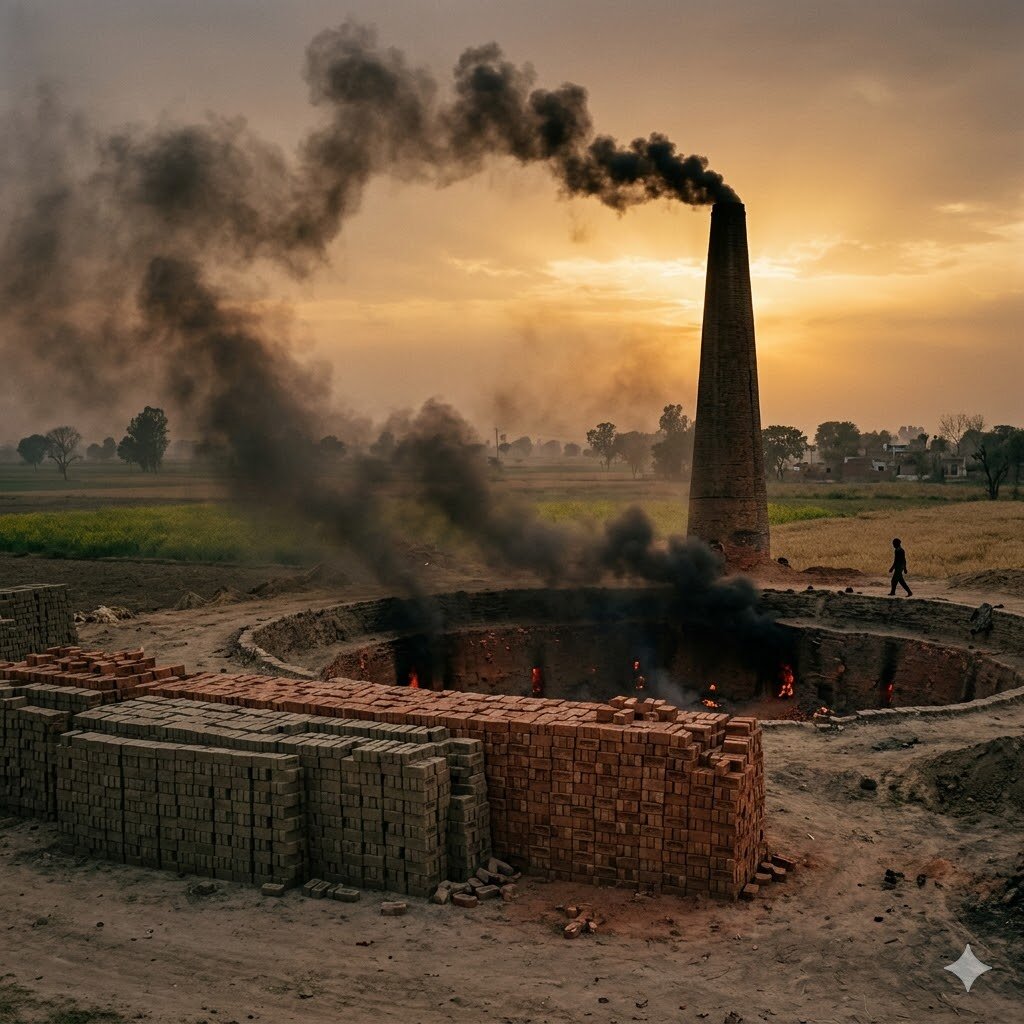
Brick Kiln Pollution in Delhi NCR: Sources and Controls
Brick production can contribute particles and gaseous pollutants to the regional air around Delhi NCR. Its impact depends on the kiln, fuel, operation, location and weather. A chimney photograph alone cannot establish the plant’s emissions or its share of pollution at a distant home.
Why kiln design and operation matter
Fuel combustion is one part of the process; handling raw materials and moving vehicles can also generate dust. A change in firing technology or fuel must be assessed through actual operating performance. “Converted” does not mean zero-emission, and an emissions reduction at one plant is not the same percentage reduction in Delhi’s ambient PM2.5.
Zigzag firing changes the path of air and combustion gases through the stacked bricks. Its intended benefits rely on appropriate design and operation. Avoid applying a single reduction percentage to every kiln without comparable measurements before and after the change.
What paddy-straw fuel policies are trying to change
Using collected crop residue as an industrial fuel can create demand for material that might otherwise be burnt in fields. That does not make combustion pollution-free. Fuel preparation, collection, combustion controls and verification all matter.
A June 2025 CAQM announcement described phased requirements for paddy-straw pellets or briquettes in brick kilns in Punjab and non-NCR districts of Haryana. That geographic scope must not be described as if it were a universal, identical requirement for every NCR kiln. Consult the current direction for an individual site’s obligations. Source: official CAQM announcement through PIB.
How much pollution comes from kilns?
A useful answer needs a dated source study, a geographic boundary and a pollutant. An inventory share for regional emissions is not automatically a share of the concentration measured in Delhi. Production seasons and restrictions can also change the result.
We therefore do not assign a permanent “6–7% of Delhi’s PM2.5” figure to this category. Read how source-apportionment figures work before comparing headline percentages.
What to check near a home
If a recurring plume appears to reach your area, record dates, times, location and wind conditions where available. Use the relevant pollution-control authority’s reporting channel for a documented concern. Do not enter an industrial site to investigate.
At home, compare indoor particles with nearby outdoor information, keeping sensor limitations in mind. Filtered supply air and room filtration address particles; they do not establish protection from every gas or odour associated with combustion. Persistent odours need source investigation.
An aqi0 site assessment considers intake location and surrounding sources. The technical note explains the installation and performance conditions; no city or source label substitutes for those checks.
FAQ
Are brick kilns the biggest source of Delhi pollution?
No. They contribute 6–7%, behind vehicles, construction/dust, and other sources. But they are a significant and underdiscussed share.
Will the paddy straw co-firing mandate work?
Technically plausible; execution dependent. Verification of actual pellet usage at kilns and verification of emission reductions are the open questions.
Why not just shut all the kilns down?
Construction demand drives ~30 billion bricks per year in NCR alone. Substitutes (concrete blocks, AAC blocks, fly-ash bricks) are growing but cannot replace the volume overnight. Regulating the kilns is more realistic than eliminating them.
Are imported bricks an option?
Brick is too heavy and bulky for long-distance transport economics. Local production is locked in by physics, not just policy.
Do clean kilns produce more expensive bricks?
Marginally. Operating cost differences are small once the capital cost of conversion is amortised. The barrier is upfront investment, not ongoing economics.