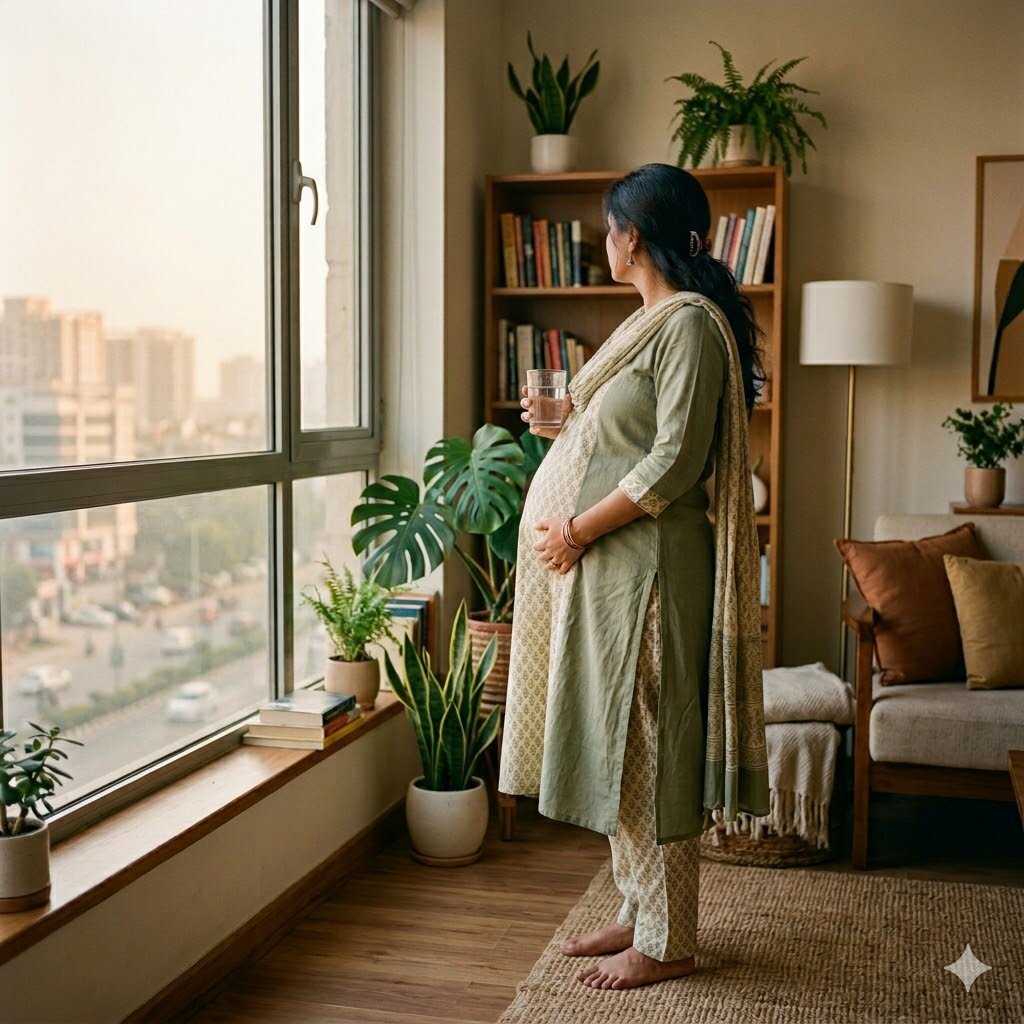
Pregnancy and Air Pollution: Questions for Your Care Team
Air pollution is one of the environmental exposures researchers study in relation to pregnancy and reproductive health. NIEHS describes this research in its reproductive health overview. A study finding an association does not predict the outcome of an individual pregnancy.
Use research carefully
Before interpreting a headline risk, ask which population, exposure period and birth outcome were studied. An odds ratio does not mean a particular person’s risk has increased by the same amount. Different pollutants, measurement methods and other factors can affect the result.
A finding in placental tissue also does not, by itself, establish the clinical effect in every pregnancy. This guide does not map particular damage to each trimester or promise that equipment installed at one stage prevents it.
Questions for an antenatal appointment
- Are there individual precautions relevant to my health and current pregnancy?
- How should local air-quality advisories affect my usual travel, work and exercise?
- Are there occupational or household exposures worth discussing?
- Which symptoms require a call or urgent assessment?
- If I am considering travel or relocation, what medical and practical factors matter?
Keep prenatal appointments, medicines and other care as advised. Do not change conception or IVF timing based on pollution season or delay treatment on the advice of an air-treatment supplier.
Record the home conditions you want to improve
Identify the rooms used most, any indoor sources and the equipment already operating. A consistent particle log can help assess an environmental change: note the room, time, outdoor conditions, activities and filter setting.
Such a log is not a measure of fetal health. It cannot quantify the percentage of pregnancy risk avoided. See how to interpret PM2.5 readings.
Choose equipment for a defined requirement
Room particle filtration and filtered outdoor-air supply are different functions. Compare coverage, installation, maintenance and actual measurements instead of a promise of a healthier pregnancy.
aqi0’s standalone whole-home air purifier supplies H13 HEPA-filtered outdoor air. The technical note describes its performance conditions and limits. It is not a clinical intervention or evidence of improved birth outcomes.
For preparing the home after birth, use the newborn planning guide, alongside advice from your care team.
FAQ
Will protecting indoor air really make a difference for the baby?
Yes. The reduction in maternal cumulative PM2.5 dose is substantial (60–80%) when indoor air is well-managed. The biological response to dose is well-documented across cohort studies.
Should I move out of Delhi during pregnancy?
The exposure case for relocation during third trimester is real. The practical and family-life costs are real too. For most families, indoor air protection + selective travel during peak AQI weeks is the practical compromise.
Is masking effective for pregnant women?
Yes. A well-fitted N95 reduces inhaled PM2.5 by 90%+ during the masked window. Tolerability varies; some pregnant women find masks uncomfortable due to respiratory load.
What about indoor cooking exposure?
Cooking is a major indoor PM2.5 source. The closed-kitchen-door + exhaust protocol is essential. If the pregnant mother is also the family cook, this matters even more.
Does this affect future pregnancies?
The cumulative damage to the mother (cardiovascular, inflammation baseline) is real. Reducing PM2.5 exposure improves subsequent reproductive health, not just the current pregnancy.
Does air pollution affect breast milk?
Some lipophilic pollutants (PAHs, persistent organic pollutants) can transfer to breast milk. Reducing maternal exposure during nursing is a continuation of pregnancy protection.