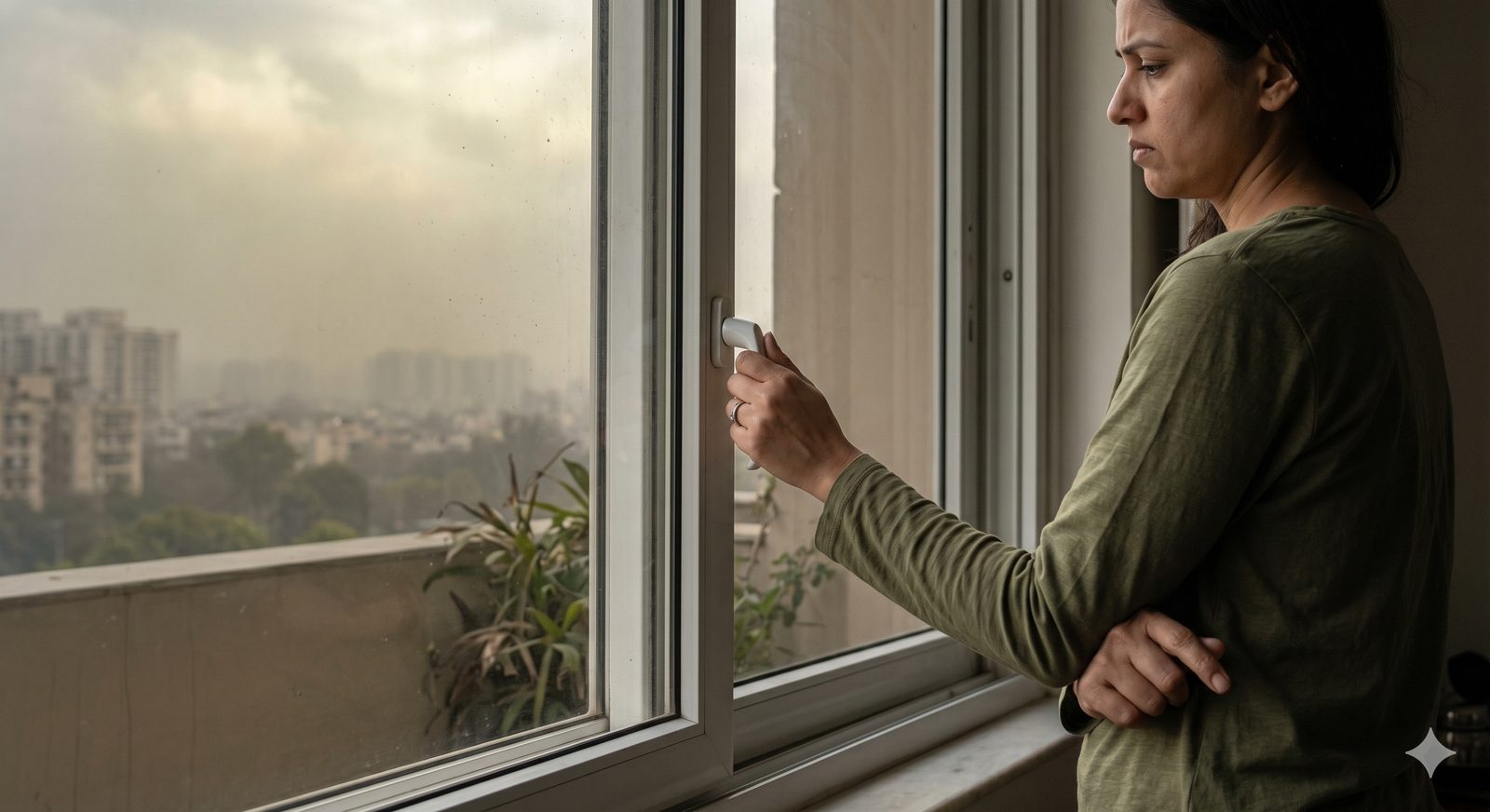
Air pollution and fertility — what the 2024–25 evidence shows for Indian couples

Air Pollution and Fertility: What the 2024–25 Evidence Shows for Indian Couples

Couples trying to conceive in Delhi NCR, Mumbai and other high-pollution Indian cities face a measurable headwind that does not appear on any IVF clinic’s intake form. PM2.5 exposure damages sperm DNA, reduces ovarian reserve, lowers IVF live-birth rates and increases miscarriage risk — independently of every other lifestyle factor. The evidence base is now strong enough that fertility specialists are beginning to discuss air quality alongside diet, stress and weight in pre-conception counselling.

Key numbers

The mechanism: how a lung problem becomes a reproductive problem

PM2.5 enters the bloodstream through the alveolar wall and circulates throughout the body. Studies have detected combustion-derived black carbon particles in human placental tissue (Bové et al., Nature Communications, 2019), in cord blood, and in ovarian follicular fluid.

Three pathways drive the reproductive effects:

1. Direct DNA damage in germ cells. Polycyclic aromatic hydrocarbons (PAHs) and heavy metals carried on PM2.5 particles are genotoxic — they cause double-strand breaks in DNA. Sperm cells are particularly vulnerable because they lack the full DNA-repair machinery of somatic cells. Eggs accumulate damage over decades because a woman’s ovarian reserve is established before birth.

2. Oxidative stress. PM2.5 generates reactive oxygen species (ROS) in tissue. Both sperm motility and embryo development are highly sensitive to ROS. Antioxidant supplements partially compensate; cleaner air solves the upstream cause.

3. Endocrine disruption. Some components of urban PM2.5 act as hormone mimics or disruptors, interfering with FSH/LH cycling in women and testosterone production in men. The 2024 Frontiers in Endocrinology mechanistic review documents the cell-signalling pathways.

What the studies actually found

Male fertility

A 2025 meta-analysis (BMC Urology) covering 17 studies and over 24,000 men globally found that higher outdoor air pollution exposure was associated with a 5.41 percentage-point increase in sperm DNA fragmentation index — a key predictor of miscarriage and failed IVF.

The 2024 Indira IVF nationwide study analysed 3,222 Indian men aged 21–40 across 120 fertility centres. Men in high-pollution AQI > 151 regions had:

These differences held after controlling for age, smoking, alcohol, BMI and occupational exposure.

Female fertility and IVF outcomes

A 2025 BMC Public Health review of PM2.5 exposure and Assisted Reproductive Technology (ART) outcomes pooled results from 14 cohort studies and reported:

A 2024 Scientific Reports paper found PM2.5 exposure associated with reduced anti-Mullerian hormone (AMH) levels — the standard marker of ovarian reserve.

Outcomes during pregnancy

Pre-term birth and low birth weight track PM2.5 dose. The 2019 Bové placental study showed black carbon particles physically present in placental tissue, with load proportional to maternal residential pollution exposure. Indian cohort studies have shown:

What pre-conception couples can actually do

Five interventions, in order of effect:

1. Reduce indoor PM2.5 exposure 24/7. The 8–10 hours spent at home each day is the easiest and biggest lever. A whole-home fresh air system holds indoor PM2.5 under 10 µg/m³ even during peak Delhi winter, when outdoor PM2.5 hits 300+. For a couple trying to conceive over 12–18 months, this represents thousands of hours of reduced cumulative exposure.

2. Mask correctly during commutes. A well-fitted N95 reduces inhaled PM2.5 by 90%+ during the commute. Fit matters more than brand — beard, gaps around the nose, and loose straps cut effectiveness in half.

3. Avoid indoor combustion at home. Candles, incense, mosquito coils and cooking on open flame without exhaust all contribute large indoor PM2.5 spikes. A single mosquito coil burning overnight is estimated to release particulate emissions equivalent to 75–135 cigarettes (Mongabay India / Discover Applied Sciences, 2019).

4. Time IVF cycles to lower-pollution months. Cycle timing is often clinical and not flexible. Where it is, monsoon months (July–September) have meaningfully lower PM2.5 than November–February in NCR. Some Indian IVF clinics now factor exposure timing into cycle planning.

5. Reduce ROS load through diet and supplementation. This is the standard fertility-clinic advice (antioxidants, folate, CoQ10). Air quality is upstream of the same biology and addresses the cause rather than the symptom.

What you can ask your fertility specialist

Three questions that should now be part of any pre-conception consult:

FAQ

Is this exposure reversible? Sperm cells regenerate every ~72 days, so reducing exposure for 3–4 months before IVF can measurably improve DNA fragmentation index. Eggs are far less reversible — ovarian reserve damage accumulated over decades is largely permanent — but reducing further exposure during a cycle still matters.

Does an air purifier solve it? Partially. A purifier in the bedroom reduces PM2.5 during sleep but does nothing for the rest of the home, the commute, or outdoor time. A whole-home fresh air system addresses the bulk of indoor exposure.

Is Delhi worse than Mumbai for fertility? Annual average PM2.5 in Delhi NCR is roughly 2–3× Mumbai’s, with much higher winter peaks. Mumbai is not safe — both cities exceed the WHO guideline — but Delhi NCR is the worst large fertility market in India.

Does moving to another city help? Yes, for the exposure-reduction part. Practical feasibility varies. Many NCR couples relocate temporarily during IVF cycles; the evidence supports this.

What about second-hand smoke and other lifestyle factors? Smoking remains the single largest controllable factor in fertility. Air pollution adds on top of, not in place of, smoking and other risks. A non-smoking couple in Delhi still carries an air-pollution headwind that a non-smoking couple in Coorg does not.