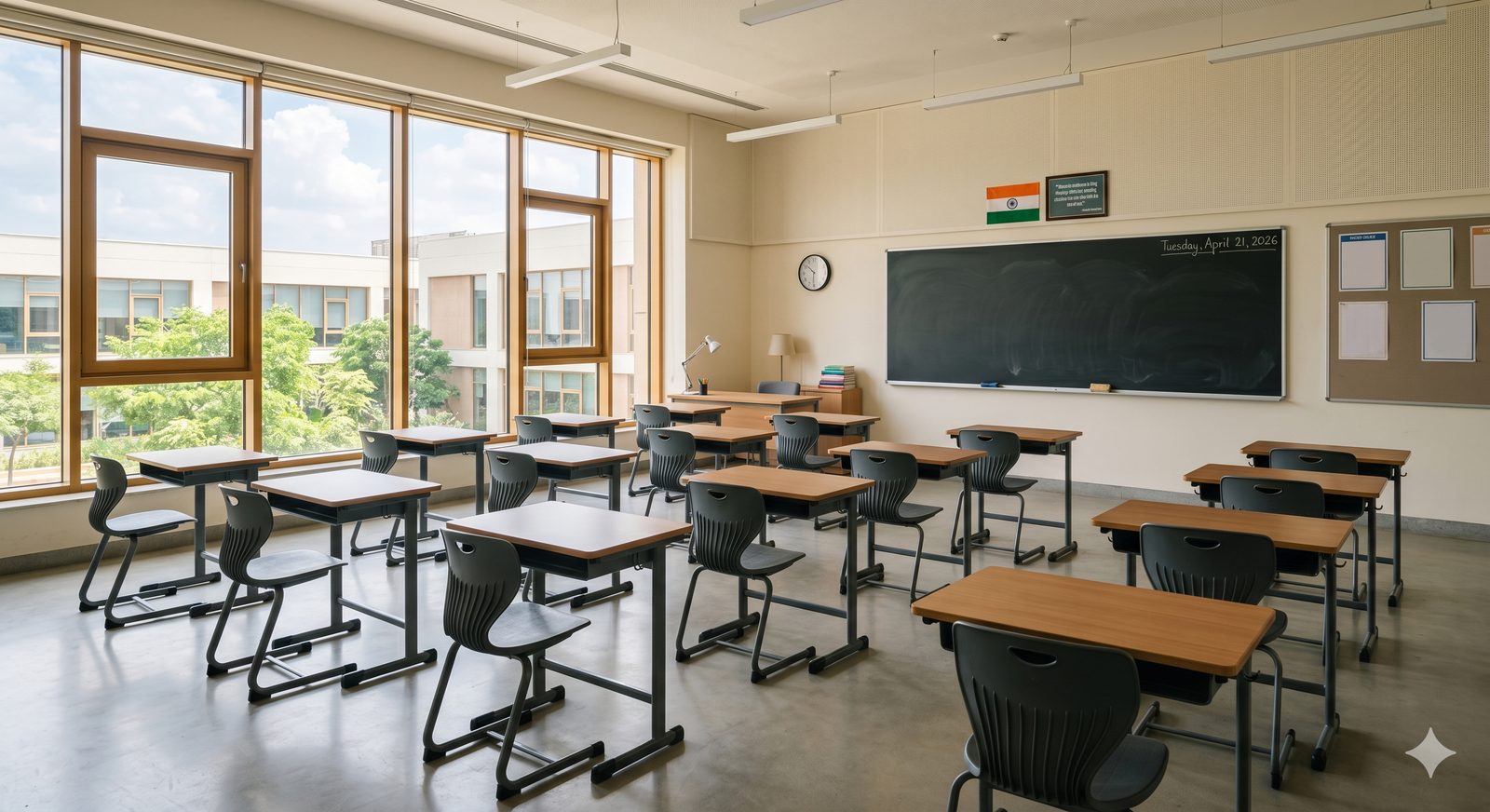
Classroom Air Quality Systems for Indian Schools
Plan classroom filtration and ventilation around occupied teaching hours. aqi0 assesses classroom layout, occupancy and existing systems before proposing filtered outdoor-air supply.
Start with occupancy and the existing system
Classrooms, staff rooms, libraries and assembly spaces have different occupancy patterns. A residential floor-area rating should not be used to decide the number of units for a full classroom.
The EPA school ventilation checklist is a useful reference for checking intakes, outdoor-air supply, distribution, cleanliness and exhaust. Apply it alongside the requirements relevant to your building.
What to share for an assessment
- Classroom dimensions and student/staff occupancy
- Timetables and use of halls or shared rooms
- Possible intake locations and access for filter servicing
- Maintenance access and suitable installation windows
Include the site location and proposed intake positions. The assessment should identify airflow routes, access constraints, electrical requirements and the paths for air to move through and leave the occupied rooms.
What aqi0 provides
aqi0 is a standalone filtered fresh-air system with its own intake and supply path. HVAC integration is not currently offered.
aqi0 supplies H13 HEPA-filtered outdoor air through a positive-pressure system. The proposed unit count and airflow depend on the assessed space. Review the system specifications and technical note before discussing site-specific work.
Particle filtration and outdoor-air supply are separate functions. A PM2.5 monitor does not establish CO₂ levels or overall indoor-air quality. Our CO₂ guide explains why a single ppm threshold cannot establish a fixed change in learning.
Agree on how performance will be checked
Before installation, agree which rooms will be measured, under what occupancy and operating conditions, and how readings will be logged. Specify the measurements and acceptance conditions in the proposal rather than relying on a universal result for every building.
Keep the original readings and repeat the same checks after installation. Identify who will review the logs, arrange maintenance and respond if performance changes.
Pricing and maintenance
Standard system pricing is ₹82,600, fully installed, per unit. A workplace or campus proposal needs a site-specific unit count and scope of work. Confirm installation access, any non-standard work and the care plan in the quote.
The optional aqi0 AQI/PM2.5 monitor is ₹4,000, sold separately. A CO₂ investigation requires an appropriate separate measurement. Maintenance access and filter servicing should be planned with the facilities team.
Chat with us
Send the school location, floor plan and occupancy details. We will discuss suitability, scope and scheduling before a proposal is finalised.
Email [email protected] or call +91 96676 72740.
FAQ for school administrators
Does this replace our existing HVAC?
No. It complements. Most Indian school HVAC is cooling-only (AC) and often recirculates without true outdoor-air intake. aqi0 provides the ventilation layer. If your HVAC has a fresh-air mode, aqi0 handles filtration and ensures the fresh-air volume is actually sufficient.
How loud is it in a classroom?
At normal operating voltage, quieter than a classroom ceiling fan on speed 2. Students and teachers do not report it as noticeable. At peak AQI (6 V during November smog), slightly audible but not disruptive to teaching.
Can we monitor performance?
Yes. The aqi0 WiFi monitor is sold separately at ₹4,000, and monitors ordered for an installation feed the dashboard. Admin dashboards can be set up to show AQI and PM2.5 per classroom in real time. Alerts can be configured for threshold breaches.
What happens during summer?
The system runs year-round. In summer, PM2.5 is lower (30-60 µg/m³ typical) but CO₂ control remains critical — classrooms with closed doors and AC still accumulate CO₂. The system matters in every season, not just winter.
Do you provide training for facilities staff?
Yes. A 1-hour training for facilities admin covers: monitor access, filter-change indicators, escalation path, and what the numbers mean. Written SOP provided.