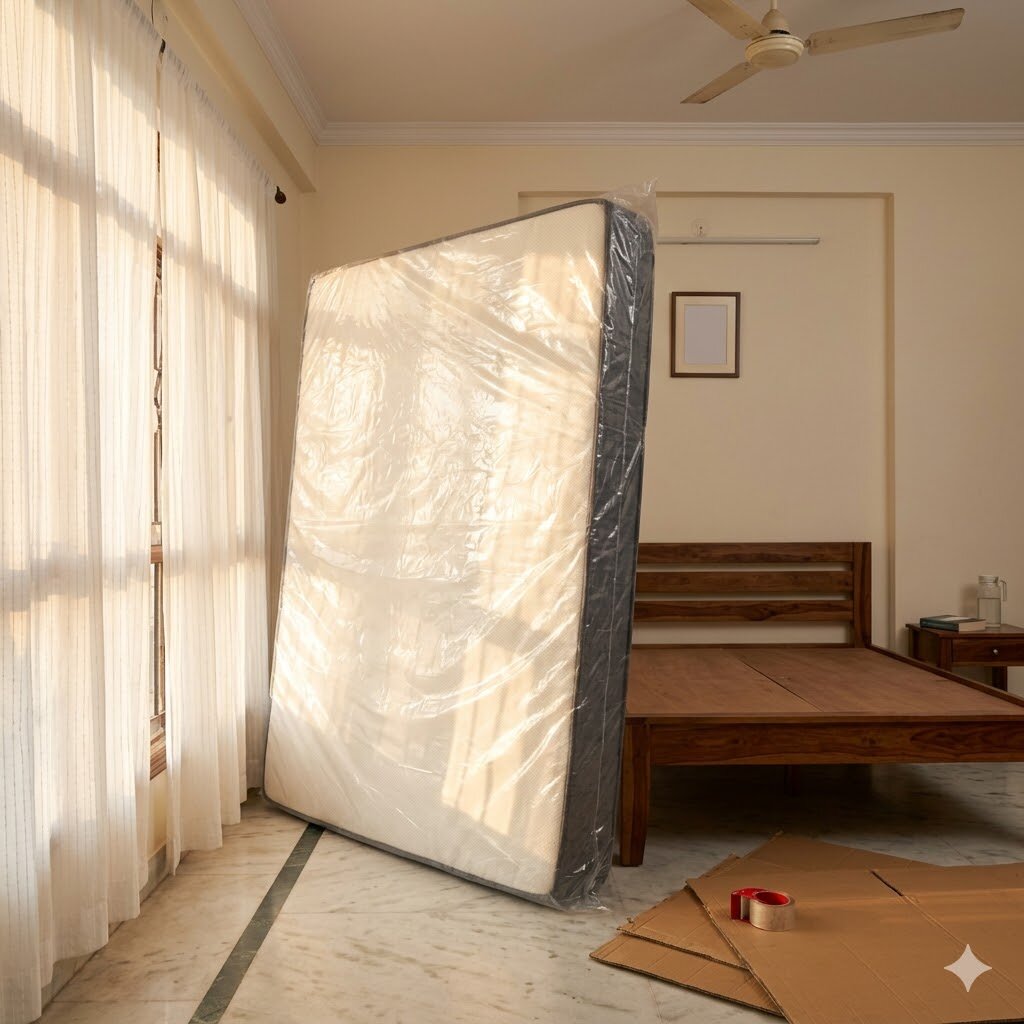
New Mattress Smell: Emissions, Certification and Setup
A new mattress may have an odour from its materials or packaging. The smell is not a reliable measure of a specific pollutant, and the same airing timetable cannot be applied to every foam, cover and adhesive combination.
What CertiPUR-US covers
CertiPUR-US is a certification programme for flexible polyurethane foam. It should not be described as blanket certification of every component of a finished mattress. Read the programme’s frequently asked questions and confirm what the seller’s claim covers.
The programme also explains how to verify certified foam claims. Ask about the exact product, rather than assuming every model from a familiar brand has the same certification. A missing logo does not establish a measured high emission level either.
Questions before delivery
- Which materials make up the foam, cover and bonding layers?
- What certification or emissions evidence applies to those components?
- What unpacking, expansion and ventilation instructions apply?
- Is the cover designed to be removed or washed?
- What is the return or support process if an odour or irritation persists?
Do not unzip or wash a cover merely because another mattress permits it. Follow the specific product’s instructions.
Set up without improvised treatments
Arrange an appropriate, dry and ventilated place for unpacking. Follow the supplier’s guidance before use. Do not leave a mattress exposed to rain, dust or excessive heat on the assumption that this makes it safer.
There is no universal claim that one night, one week or one month makes every mattress emission-free. If symptoms occur, avoid continued exposure and seek appropriate advice rather than relying only on a TVOC display.
For a child’s sleep space
Select a mattress suitable for the child’s bed or cot and follow the applicable sleep-safety guidance. An air-quality preference should not lead to adding loose padding, an unsuitable topper or a soft replacement to an infant’s sleep surface.
Home air treatment has limits
A particle monitor does not identify mattress VOCs. HEPA filtration cannot certify that gases have cleared, and aqi0 does not promise to shorten a mattress manufacturer’s waiting period.
Read VOCs in homes and bedroom ventilation for the separate measurement questions.
FAQ
Is the chemical smell harmful?
At measured concentrations in certified products, no documented health effects. Some users report eye/throat irritation or headache during the first days; this is real but generally resolves with ventilation.
Should I avoid memory foam if I have asthma?
Asthma sensitivity to VOCs varies by individual. Pure latex or cotton-batting mattresses have lower VOC profiles. Discuss with a respiratory specialist if symptoms occur.
What about my child’s mattress?
Same principles, more conservative. Off-gas the mattress at least a week before use. Choose CertiPUR-certified products or natural alternatives where possible. Avoid budget unbranded foam mattresses for cribs and nurseries.
How long does the off-gassing actually last?
Sharp smell: 3–7 days. Detectable VOC above background: 3–4 weeks. Trace residual emission: months to years, slowly declining.
Are “natural” mattresses really better?
For VOC profile, generally yes. Natural latex, cotton-batting, wool and innerspring mattresses with natural-fibre covers emit substantially fewer VOCs. Cost, weight, durability and feel differ; not everyone prefers them.